🧠 Overview
Frontal migraines originate from compression of the supraorbital and supratrochlear nerves as they exit through small bony openings above the eyebrows. They can also get compressed by the frowning muscles. These nerves provide sensation to the forehead and front of the scalp.
🎯 Affected Nerve:
Supraorbital and Supratrochlear Nerves
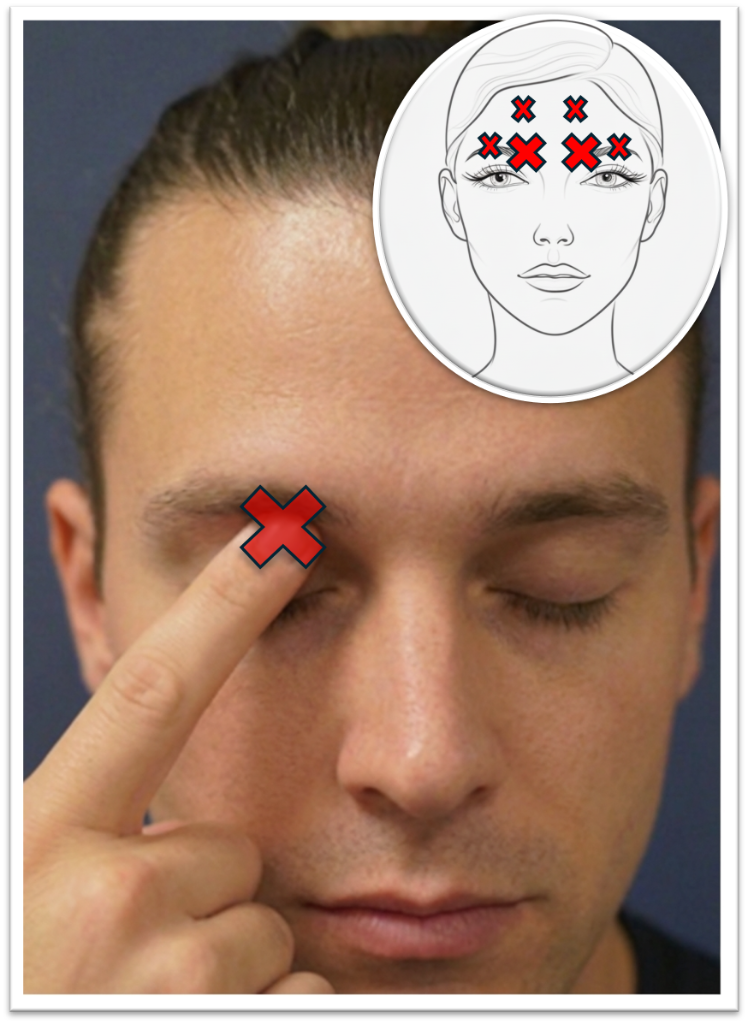
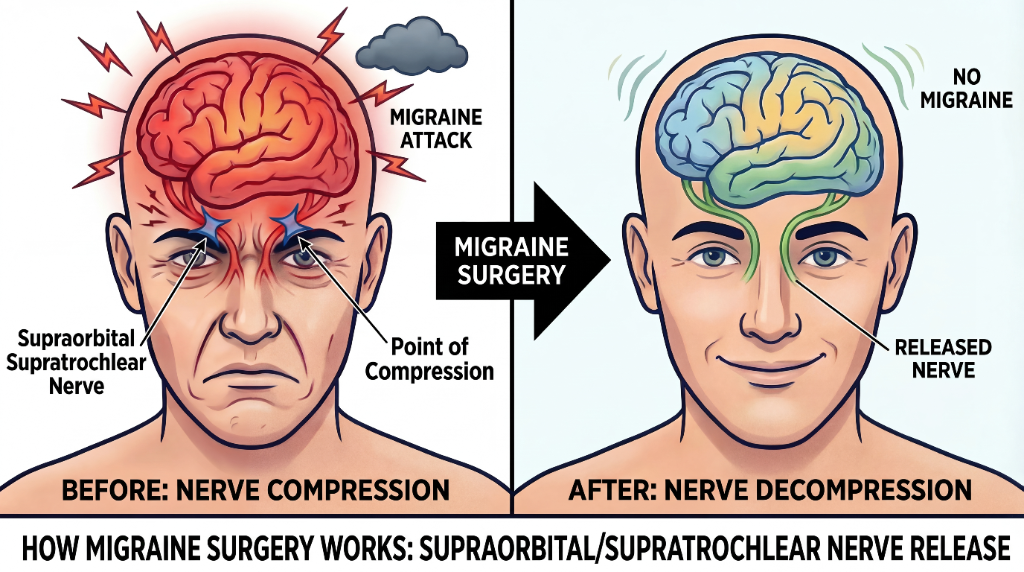
Supraorbital and Supratrochlear Nerves Deactivation
💭 Headache Characteristics
📍 Pain Location
Pain starts just above the eyebrow and radiates upward across the forehead, often extending to the top of the head.
⚡ Pain Character
Typically described as a sharp, stabbing, or throbbing pain. Patients often report pressure or tightness above the eyes that intensifies with eye movement or frowning.
🌊 Pain Migration Pattern
The pain begins at a specific point above the eyebrow and spreads horizontally across the forehead, sometimes reaching the temples. It may also radiate vertically toward the hairline.
✨ Pain Quality
Sharp, piercing quality during acute episodes. Between attacks, patients may experience a dull ache or pressure sensation.
🔬 Diagnostic Nerve Block
A diagnostic nerve block is performed by injecting local anesthetic just above the eyebrow at the point where the nerves are compressed. Relief within 10-15 minutes confirms this trigger zone.
💡 Important: A positive response to nerve block is the most reliable way to confirm this trigger zone and predict surgical success.
⚕️ Surgical Procedure
Surgery involves a small upper eyelid crease. The nerves are carefully released from surrounding muscle (corrugator supercilii) and any compressing blood vessels or fascial bands. The procedure typically takes 30-45 minutes.
📊 Expected Outcomes
💊 Pain Relief Results
87-92% of patients experience significant pain reduction. Most report 60-80% decrease in headache frequency and intensity within 3-6 months.
💊 Medication Reduction
Over 75% of patients reduce their medication use by at least 50%. Many are able to discontinue preventive medications entirely.
🏥 Recovery & Postoperative Care
Minimal downtime. Most patients return to desk work within 3-5 days. Temporary mild swelling or bruising above the eyebrows resolves within 1-2 weeks. Full recovery takes 4-6 weeks with complete resolution of surgical swelling.
⏱️ Recovery Timeline:
- Days 1-3: Rest, ice application, minimal activity
- Days 4-7: Return to light activities, desk work
- Weeks 2-4: Gradual increase in activity, exercise
- Weeks 4-6: Full recovery, return to all activities