🧠 Overview
Temporal migraines are caused by compression of the auriculotemporal nerve, typically by the superficial temporal artery or surrounding fascia. This nerve runs alongside the temple area just above and in front of the ear. Compression of the zygomaticotemporal nerve can also cause temporal migraine. This nerve runs along the lateral aspect of the eye.
🎯 Affected Nerve:
Auriculotemporal and Zygomaticotemporal Nerves
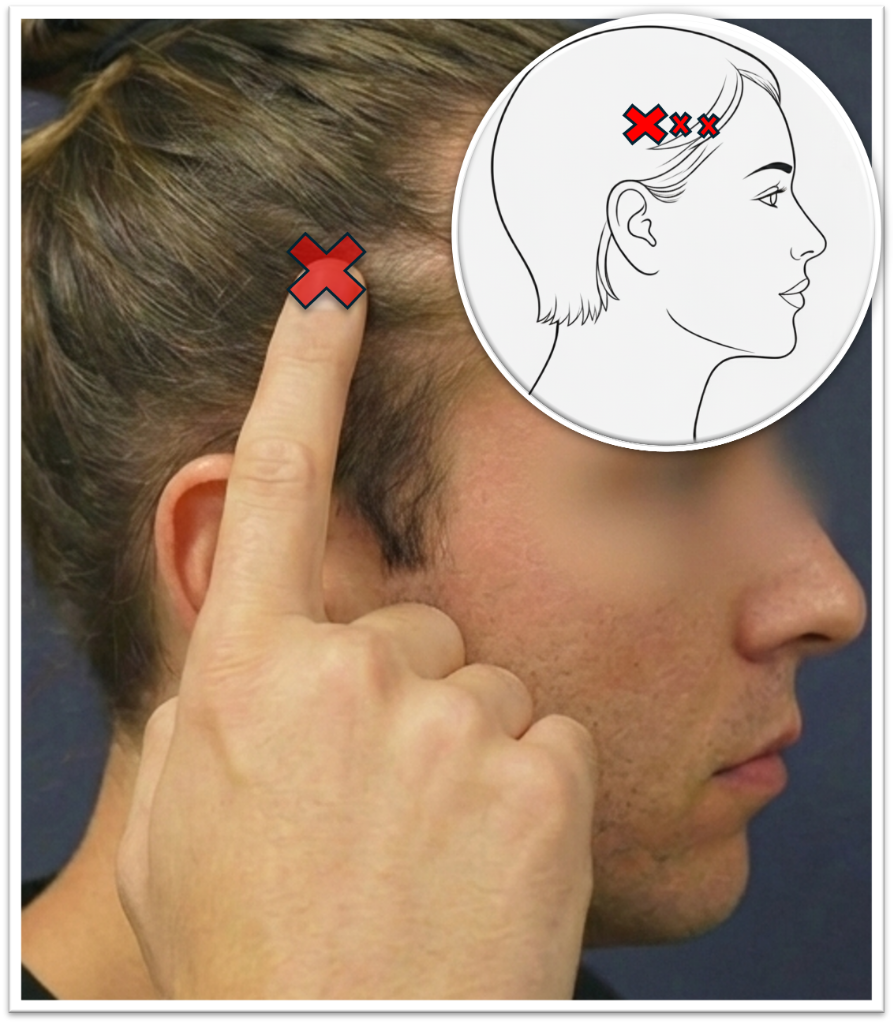
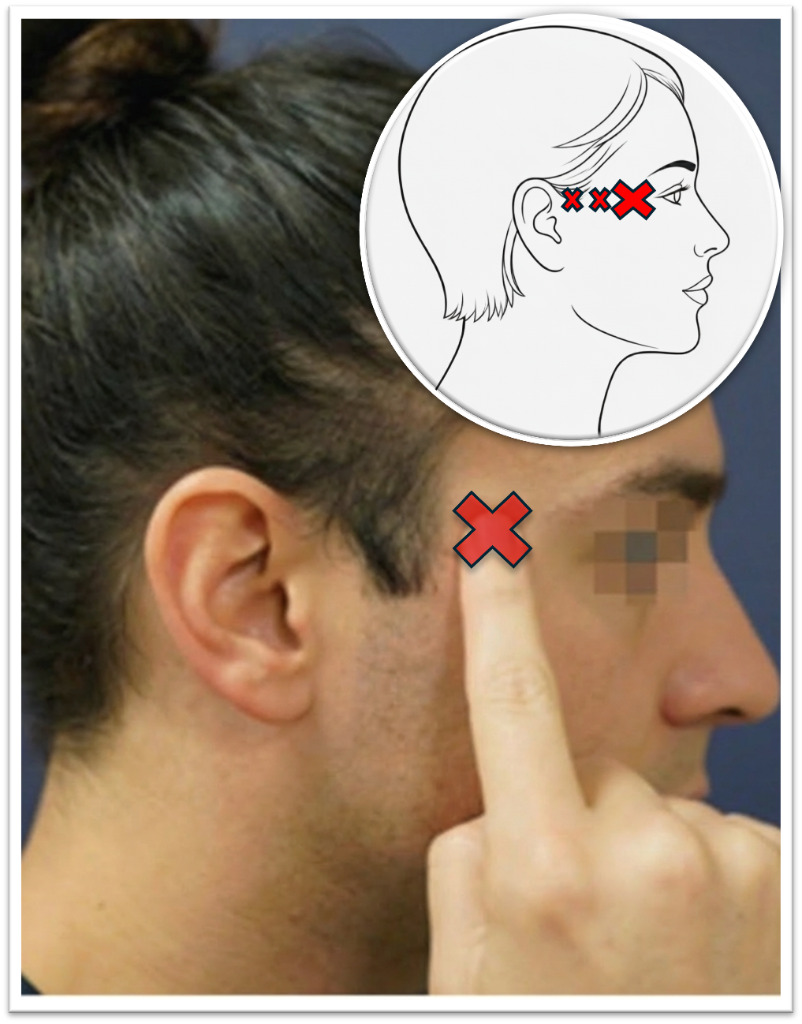
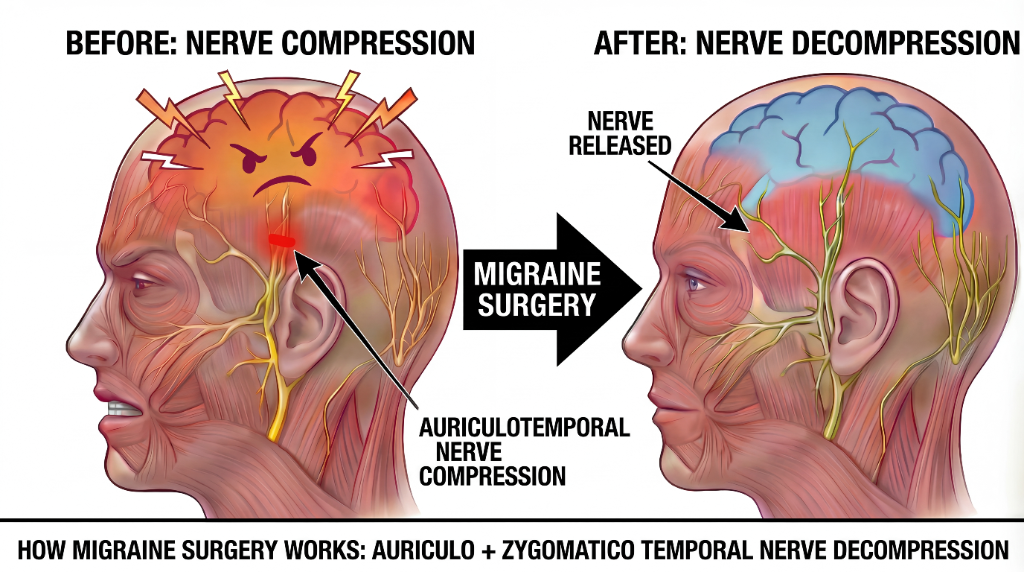
Auriculotemporal and Zygomaticotemporal Nerves Deactivation
💭 Headache Characteristics
📍 Pain Location
Pain originates at the temple area, approximately 2-3 cm above the ear. It may extend forward toward the eye or backward toward the ear.
⚡ Pain Character
Often described as a severe throbbing or pulsating pain that follows the heartbeat. Patients may feel the temporal artery pulsating under the skin during attacks.
🌊 Pain Migration Pattern
The pain typically starts at one temple and may spread across the side of the head. Some patients experience bilateral temporal pain, though it usually begins on one side.
✨ Pain Quality
Intense pulsating pain during acute episodes. The quality is often rhythmic, matching the pulse. Between attacks, there may be tenderness to touch in the temple area.
🔬 Diagnostic Nerve Block
Nerve block is performed by injecting anesthetic around the auriculotemporal nerve just above the ear. A positive response (pain relief within 10 minutes) indicates nerve compression at this site.
💡 Important: A positive response to nerve block is the most reliable way to confirm this trigger zone and predict surgical success.
⚕️ Surgical Procedure
The procedure uses a small incision hidden within the hairline above the ear. The temporal artery is carefully separated from the nerve, and any compressing fascial bands are released. The surgery takes approximately 45-60 minutes.
📊 Expected Outcomes
💊 Pain Relief Results
85-90% success rate in reducing temporal headaches. Patients typically report 70-85% reduction in attack frequency and severity.
💊 Medication Reduction
80% of patients significantly reduce their use of acute pain medications. Many find they no longer need daily preventive medications.
🏥 Recovery & Postoperative Care
Very minimal recovery time. Most patients resume normal activities within 5-7 days. Temporary numbness around the incision site usually resolves within 2-3 months. Small incision heals with barely visible scarring.
⏱️ Recovery Timeline:
- Days 1-3: Rest, ice application, minimal activity
- Days 4-7: Return to light activities, desk work
- Weeks 2-4: Gradual increase in activity, exercise
- Weeks 4-6: Full recovery, return to all activities